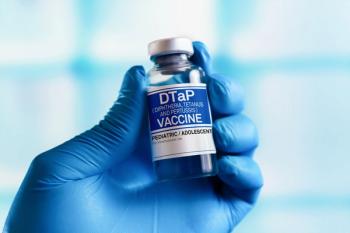
Completing the DTaP primary series was 96.2% effective against pertussis in Alaska children aged 6 months to 6 years during a record 2024 outbreak.
A Contemporary Pediatrics Peer Exchange panel reviews RSV risk, testing, maternal vaccination, and long-acting monoclonal antibodies, and where infants still slip through the cracks.
Respiratory syncytial virus (RSV) has long been a fixture of the winter pediatric ward. With maternal vaccination and 2 long-acting monoclonal antibodies now available, a panel of pediatric infectious disease specialists says severe RSV in infants can become uncommon, if practices close the gaps in delivery.
The discussion was moderated by Flor M. Munoz, MD, MSc, of Baylor College of Medicine in Houston, Texas. Panelists were C. Buddy Creech, MD, MPH, of Vanderbilt University Medical Center in Nashville, Tennessee; Eric Simões, MD, of the University of Colorado Anschutz in Aurora; and Tina Tan, MD, FAAP, FIDSA, FPIDS, of Northwestern University Feinberg School of Medicine in Chicago, Illinois, and editor-in-chief of Contemporary Pediatrics.
RSV typically circulates in the US from October to April, but seasons start earlier and last longer in the Southeast, beginning as early as June in Florida, Tan said. RSV causes up to 80,000 hospitalizations a year in children younger than 5 years, most in infants younger than 12 months.
Young age is the biggest risk factor because the virus exploits the small infant airway, Creech said. Prematurity, congenital heart disease, chronic lung disease, neuromuscular disorders, and immunocompromise add risk. Simões added daycare attendance, household crowding, smoke exposure, and a maternal history of asthma.
Yet most hospitalized infants have none of these conditions. "More likely than not, if you're admitted to the hospital with RSV, you're a healthy baby," Creech said.
Creech challenged the habit of skipping viral testing because results won't change management. "Sometimes I feel like our Hippocratic Oath has gone from first do no harm to first do no tests," he said. A specific diagnosis lets clinicians counsel families on the illness's course and flag children for second-season prophylaxis.
Prognosis, including the risk of recurrent wheezing, differs by virus, Simões added. Accurate nucleic acid tests, including rapid in-office platforms, are available, but outpatient RSV testing often is not reimbursed the way influenza and COVID-19 testing is.
Maternal vaccination is recommended at 32 to 36 weeks' gestation, and at least 14 days between vaccination and delivery are needed for optimal antibody transfer, Simões said. Infants whose mothers were unvaccinated or vaccinated fewer than 14 days before delivery are candidates for a monoclonal antibody, ideally given at birth.
Nirsevimab and clesrovimab are approved for infants younger than 8 months born during or entering their first RSV season, Tan said. Nirsevimab is weight-based (50 mg below 5 kg; 100 mg at 5 kg or more), while clesrovimab is a single 105-mg dose. Nirsevimab is currently the only agent approved for a second-season dose, at 200 mg, in children aged 8 to 19 months at increased risk.
For parents, Creech contrasts vaccines, a "flight simulator for the immune system," with monoclonals, which fill "the immunologic gas tank." An Fc modification extends the antibodies' half-life so a single dose protects for 6 to 8 months.
Real-world data mirror trial results, the panelists agreed. Creech cited reductions of 60% to 85% in RSV hospitalization and 60% to 75% in medically attended lower respiratory tract infection, plus fewer ICU admissions and shorter stays for breakthrough cases. Both strategies are "remarkably safe," he said, with occasional injection-site reactions, rare fever, and no anaphylaxis signal.
Simões flagged one item to watch: surveillance in France found resistance mutations in 9% of RSV B isolates from treated infants. The risk is theoretical for now, and genomic surveillance is under way.
"A goal without a plan is just a wish," Creech said, urging practices to build RSV action plans with a named champion and periodic review. He identified 3 common gaps:
He also advised giving a monoclonal to an eligible infant even after early-season RSV, because protection against one strain does not fully cover another.
Simões described an equity gap: children with Medicaid, among those at highest risk, were more likely to have missed their dose.
Tan said widespread vaccine misinformation has driven declines in immunization rates and contributed to measles and pertussis outbreaks, although RSV prevention has seen fairly good acceptance. She urged pediatricians to remain strong vaccine advocates, using motivational interviewing: ask about concerns, listen empathetically, and respond with sound science.
Creech described hesitancy as "a marathon and not a sprint," often rooted in values around purity and freedom. He frames RSV prevention as a choice: "Would you rather be vaccinated during pregnancy? Here it is. Would you rather your child receive a monoclonal antibody? … Then here it is. But regardless, we want your baby to be protected."
Simões called for closer coordination with obstetricians. He described hospitalized infants whose parents were told to skip the maternal vaccine and wait for a monoclonal. Because the options perform comparably, he said, clinicians should offer both equally. "I've seen the effects of recommending one over the other, and then the child gets neither."
Severe RSV in infants "can't be a never event," Creech said, but "it really should become uncommon." Extending protection to older, medically fragile children could finally put RSV "in the rearview mirror rather than in the passenger seat right next to us."